
In this article
Industrial bakeries and pasta makers produce more than ever reaches a shelf. Loaves that come out the wrong shape, batches that miss a specification and flour-based residues from the line all leave the factory as side streams. They are rich in starch, and starch is a useful raw material.
A side stream is not the end of the story
Plastic Move works only with starch-rich side streams generated by industrial food production. They are production by-products, not household or post-consumer food waste, which keeps the feedstock consistent, traceable and safe to work with.
From bread to material
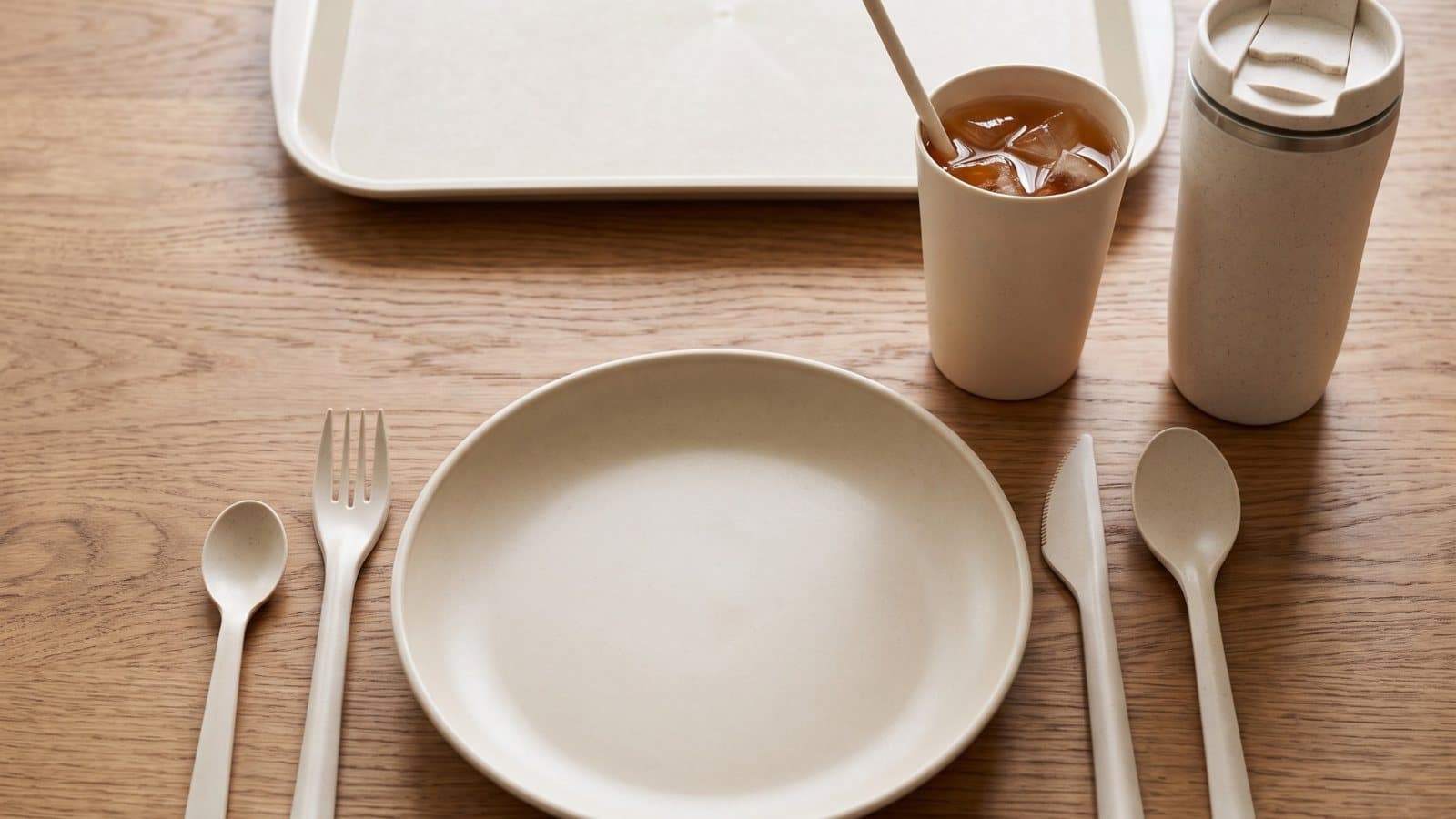
Patented bioplastic technology processes these side streams and lets their starch-based content become part of a functional material formulation. The result, PMBIO, contains 60% bio-based content and is formed into reusable forks, spoons, knives, straws and trays that keep the durability people expect.
- Collected: surplus and off-spec bread, pasta and flour-based residues from production lines.
- Processed: the starch-based content is recovered and prepared for the formulation.
- Formed: the material is shaped into reusable foodservice products.
- Reused: products are washed and used again, and recycled where local systems accept them.
Why it matters
Every kilogram of starch-based content in the formulation is a kilogram less of conventional fossil-based plastic. The actual climate benefit depends on the full life cycle, which is why we design for reuse first and treat the material as something worth keeping in use.