In this article
Recycling taught a generation to see waste as a resource. Upcycling takes the idea a step further: instead of recovering a material at the same or lower value, it turns a by-product into something worth more than it was before.
Recycling and its limits
Recycling depends on local collection, sorting and compatible processing. Where those systems exist it keeps materials in use, but each cycle can reduce quality, and many items never reach a recycling line at all.
What upcycling changes
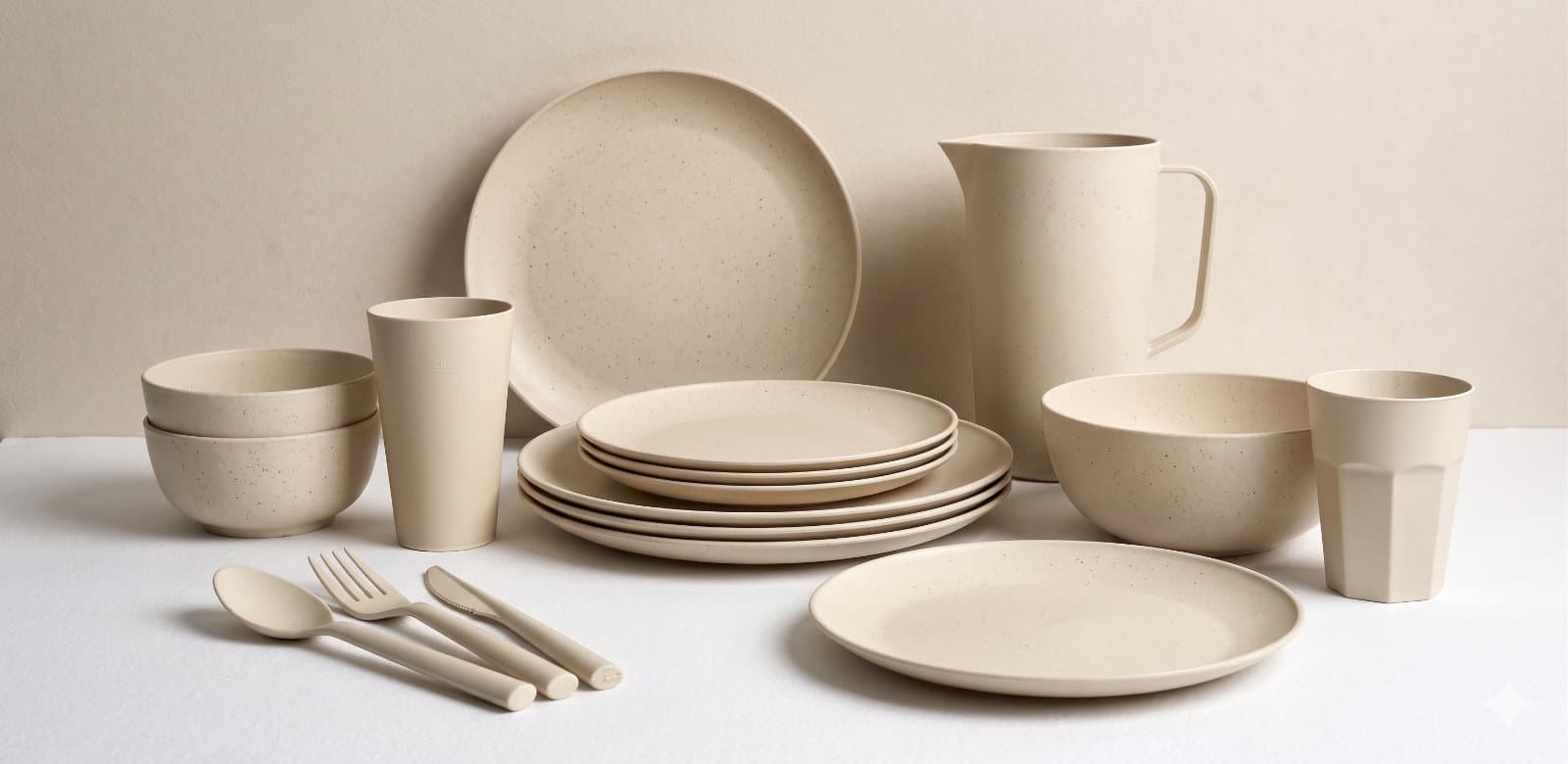
Upcycling starts earlier, with streams that would otherwise leave the economy. Plastic Move upcycles starch-rich side streams from industrial food production, such as surplus bread and pasta, into PMBIO, a material with 60% bio-based content used for reusable foodservice products.
The order that matters
- Reuse first: a durable product washed and used many times does the most good.
- Upcycle inputs: give production by-products a second, higher-value life.
- Recycle at the end: return products to recycling where local systems accept the material.
None of these steps works alone. Together they describe a foodservice model in which materials keep their value for as long as possible.